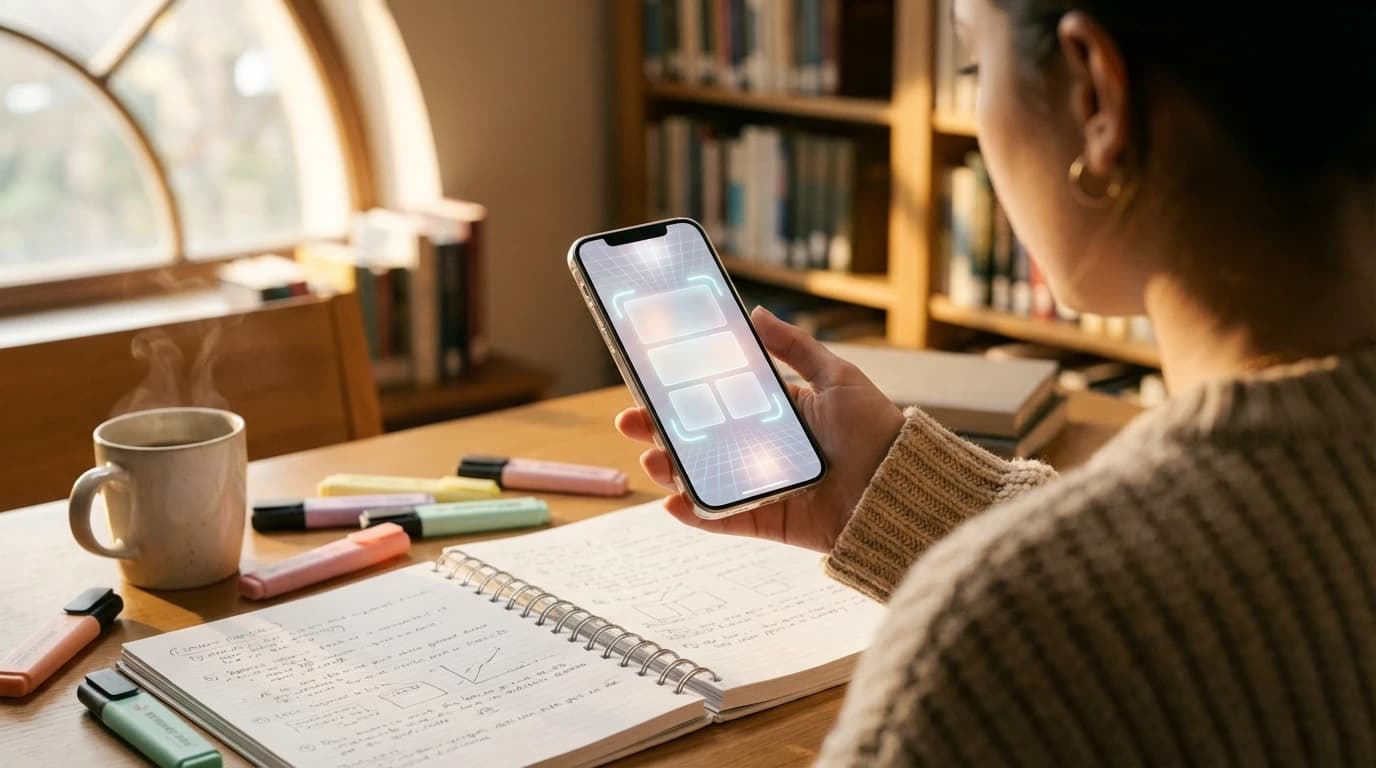
- —AI text parsing instantly converts lengthy study materials into interactive practice tests and flashcards.
- —Optical Character Recognition (OCR) software allows you to scan handwritten class notes directly into mobile study apps.
- —Relying on active recall through mobile quizzes improves long-term memory retention by up to 50 percent compared to passive reading.
- —Simulating actual exam environments with generated multiple-choice questions reduces test anxiety and builds cognitive endurance.
- —Combining automated quiz generation with spaced repetition ensures you focus on the concepts you struggle with most.
Key Takeaways
Preparing for exams often feels overwhelming when you are staring at hundreds of pages of raw information. If you want to turn notes into quizzes, modern AI tools fundamentally change how your brain processes and stores academic material, breaking massive blocks of text into bite-sized, interactive practice questions.
How do I automatically generate a quiz from my notes?
You can automatically generate a quiz by pasting your text into an AI-powered study application. These platforms instantly parse your material to build multiple-choice, true/false, and short-answer formats.
The traditional method of building a study guide involved painstakingly copying and pasting definitions. Today, you simply provide the raw material, and the software handles the formatting using AI text parsing. This technology identifies key entities—like historical dates or scientific formulas—and isolates them to form challenging prompts.
First, ensure your notes are clearly formatted with headings and bullet points. Next, select a reliable study app like SnapQuiz, paste your text, and choose your test type. Within seconds, your static text becomes an interactive study session.
According to research from Educause, students utilizing mobile learning environments study more frequently in short bursts. Automatically generating quizzes lets you capitalize on brief downtime, transforming it into productive retrieval sessions.
What is the best AI app for making study quizzes?
The best AI app for making study quizzes provides highly accurate question generation, accepts multiple file formats, and features a clean mobile interface. Students prioritize speed and the ability to customize question difficulty.
The foundational requirement for any top-tier application is accuracy; it should not generate hallucinated facts or logically flawed multiple-choice options. When evaluating a Quizlet alternative, look for platforms integrating seamlessly with your workflow. SnapQuiz, for example, allows you to convert class notes to mobile quizzes without requiring complex formatting. You can also explore our active recall study guide for better test prep.
| Feature | Manual Quiz Creation | AI App Generation |
|---|---|---|
| Time Required | 1-2 hours per chapter | 5-10 seconds per chapter |
| Question Variety | Limited by user creativity | High variety (Multiple Choice, True/False) |
| Mobile Formatting | Often clunky | Optimized for smartphones |
| Format Support | Copy-paste only | PDF, DOCX, OCR, Text |
Stanford University researchers emphasize that successful AI tools act as facilitators for human learning rather than replacements. Choose an app that challenges your memory rather than simply giving you the answers.
Can I turn handwritten notes into flashcards on my phone?
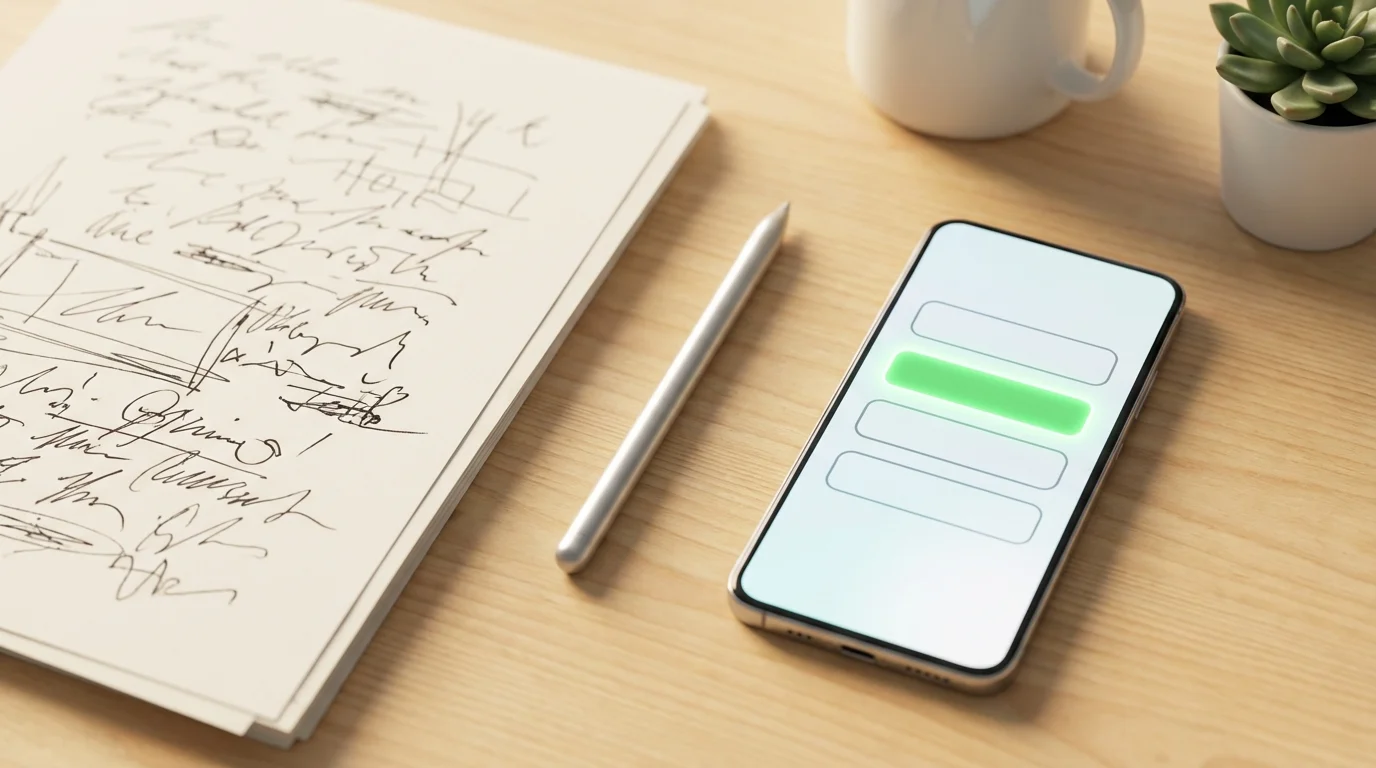
Yes, you can turn handwritten notes into flashcards using applications equipped with Optical Character Recognition (OCR). The software uses your smartphone camera to scan the physical page and translate your handwriting into digital text.
Modern mobile processors easily decode complex penmanship. To turn handwritten notes into multiple choice quizzes, simply take a well-lit photo of your notebook page. The application extracts the text layer and feeds it into the AI parsing engine.
To ensure the best scanning results:
- Write with a dark pen on high-contrast paper and space your handwriting reasonably to prevent blurred words.
- Take photographs in natural lighting to avoid shadows.
- Briefly review the digital output to correct minor spelling errors before generating the test.
According to technical evaluations published by IEEE, modern neural-network-based OCR systems achieve over 98 percent accuracy on standard handwritten documents. This reliability makes digitizing your physical notebooks a highly efficient study strategy.

How do you convert a PDF study guide into a quiz?
To convert a PDF study guide into a quiz, upload the file into a dedicated quiz generator that reads the document's text layers and instantly reformats the content. The application scans the document, isolates key facts, and presents a ready-to-take practice exam.
Many courses distribute massive PDF textbooks. When you auto generate flashcards from pdf notes, you break these massive documents into manageable, interactive components for better memory retention.
Once uploaded, the AI evaluates the document's context. For instance, a biology PDF prompts the system to recognize cellular structures and generate appropriate multiple-choice distractors that make sense in context. Ensure your PDFs are text-based; if you cannot highlight the text, the AI must use OCR, which adds processing time.
Are there free apps to make quizzes from text?
Yes, several free applications let you make a quiz from your notes by pasting text into a dashboard. However, completely free tiers often impose strict daily limits on question generation.
Many 2026 freemium options generate basic flashcards and multiple-choice questions at no cost. While excellent for casual studying, free tools sometimes lack the capabilities required for rigorous university courses, such as unlimited document uploads or advanced AI analysis.
When testing free platforms, monitor the quality of the multiple-choice distractors. Poor-quality AI generates obvious, nonsensical incorrect options, failing to adequately prepare you for a real exam. A high-quality tool creates challenging distractors that force you to deeply understand the material.
How does active recall improve learning with mobile quizzes?
Active recall improves learning by forcing your brain to retrieve information rather than passively rereading it, significantly strengthening neural pathways. Mobile quizzes trigger this retrieval process by constantly demanding answers to specific prompts.
Passive study methods, like highlighting textbooks, create an illusion of competence. Active recall shatters this illusion; when an app asks a direct question, you either know the answer or you do not.
According to the American Psychological Association, retrieval practice is a robust finding in cognitive science, and students who engage in regular self-testing outperform passive reviewers by a massive margin. Combining active recall with mobile technology eliminates the friction of starting a study session, maximizing cognitive effort while minimizing setup time.
What is the best way to study using practice tests?
The most effective way to study using practice tests is simulating actual exam conditions and pairing your testing with spaced repetition systems. Reviewing your incorrect answers is just as important as taking the test itself.
To maximize results, rely on Spaced Repetition Systems (SRS). These algorithms track performance to show difficult questions more frequently while pushing easier ones further into the future.
Implement these strategies:
- Test yourself early, even before feeling fully prepared.
- Interleave subjects to build cognitive flexibility, and keep mobile sessions short (15-20 minutes).
- Always analyze exactly why your selected answers were incorrect.
Institutions like Harvard University actively promote interleaving and self-testing. Turning your notes into dynamic practice tests aligns your habits with proven cognitive science for total exam confidence.
Frequently Asked Questions
What formats can I use to upload my study notes?
Most modern study applications accept plain text, PDF documents, DOCX files, and direct image uploads. Some advanced platforms also allow you to import directly from cloud storage or take live photos of handwritten pages.
Is AI good at creating multiple-choice questions?
Yes, AI accurately identifies core concepts, dates, and definitions to generate highly reliable multiple-choice questions. However, students should always briefly review the generated questions to ensure they perfectly align with their specific syllabus.
How long does it take to generate a mobile quiz?
Generating a mobile quiz from your notes takes less than ten seconds using modern AI parsing. Simply upload your document or paste your text, and the software instantly restructures the information into a full practice test.
Will making quizzes from notes help me pass my final exams?
Yes, converting your notes into interactive quizzes forces you to practice active recall, which significantly improves long-term memory retention. Testing yourself frequently is proven to yield higher exam scores than passive reading.
Sources
- SnapQuiz — AI-powered application for instantly converting study notes into interactive mobile quizzes.
- Educause — Research and statistics regarding the frequency and benefits of mobile learning environments in higher education.
- Stanford University HAI — Analysis on how artificial intelligence is shaping study habits and educational technology tools.
- IEEE Xplore — Technical evaluation of Optical Character Recognition (OCR) systems and their accuracy in digitizing handwritten documents.
- American Psychological Association — Comprehensive psychological findings on how retrieval practice and active recall improve long-term memory retention.
- Harvard University Derek Bok Center — Evidence-based teaching strategies highlighting the cognitive benefits of self-testing and active learning methodologies.