- —Quiz apps often provide better context and variety, while flashcards excel at isolated fact memorization.
- —Combining active recall with automated study scheduling yields the highest retention rates for students.
- —Modern digital alternatives to paper flashcards reduce cognitive load by organizing study sessions automatically.
- —Tracking test scores through mobile quizzes gives immediate feedback, a crucial element for exam preparation.
Key Takeaways
Choosing the right study tool can drastically change your exam outcomes. You are likely debating between traditional flashcards and interactive mobile quizzes. Knowing how your brain processes information helps you settle the flashcards vs quiz apps debate and pick the method that secures your target grade. For more strategies, check out our study tips guide.
Are quiz apps better than traditional flashcards?
Quiz apps are generally better than traditional flashcards when you need varied testing formats, context-rich questions, and automated progress tracking. Traditional flashcards remain superior only for rapid-fire memorization of standalone vocabulary or specific formulas.
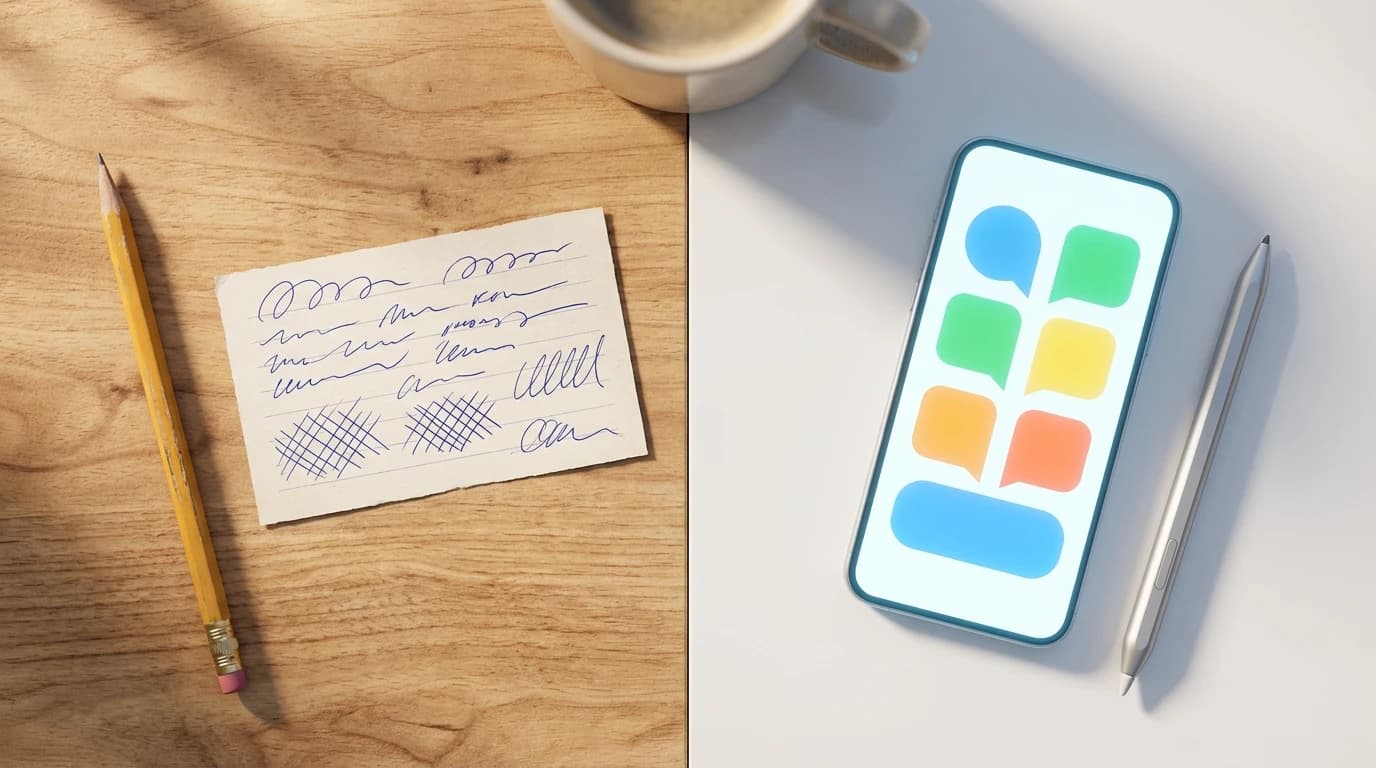
When comparing flashcards vs quiz apps, the key difference lies in the interaction. A basic flashcard prompts a binary pass/fail recall attempt. Modern quiz apps incorporate varied question types that test your understanding from different angles, forcing true comprehension instead of just memorizing card order.
The best alternatives to paper flashcards 2026 offers prioritize platforms mixing these question types. According to the American Psychological Association, mixing retrieval formats during study sessions improves long-term retention by up to 43%.
| Feature | Traditional Flashcards | Quiz Apps |
|---|---|---|
| Recall Type | Pure, unassisted recall | Recognition and assisted recall |
| Context | Isolated facts | Rich context and scenarios |
| Feedback | Self-assessed | Automated and immediate |
| Setup Time | High (if handwritten) | Low (with automatic generation) |
Gamified learning interfaces keep motivation high. Unlike paper cards, digital tools track your accuracy over time and alert you to syllabus weak points.

How do active recall and spaced repetition improve studying?
Active recall forces your brain to actively retrieve information from memory, while spaced repetition calculates the exact moment you are about to forget it to test you again. Together, these methods flatten the forgetting curve and securely move data into long-term memory.
The power of active recall
When you look at a prompt, you must mentally search for the answer. This cognitive effort signals that the information is important, leading to stronger memory consolidation. Whether practicing active recall using flashcards or quizzes, the struggle to remember builds the memory.
A comprehensive review by the National Institutes of Health confirms that active retrieval practice produces significantly greater learning gains compared to elaborative studying techniques. Overloading your working memory reduces efficacy, so keep prompts atomic—one specific concept per card.

Mitigating the forgetting curve
When evaluating digital flashcards vs multiple choice quizzes, digital platforms ensure you repeatedly test yourself without carrying physical materials. Research from Dartmouth College indicates that digital study aids tracking user progress effectively track memory decay and prompt reviews right on time.
Spaced repetition systems (SRS) remove guesswork by feeding you only the concepts you struggle with. A study documented by EdSurge found students using spaced repetition algorithms retained 92% of material over a semester, compared to 60% using traditional schedules. Finding the top spaced repetition flashcard apps free of charge dramatically improves efficiency.
What is the best quiz app for studying?
The best quiz app in 2026 combines customizable questions, intelligent algorithms, and engaging interfaces. Tools like SnapQuiz let you instantly generate quizzes directly from class notes.
Finding the best quiz apps for college students means choosing tools that reduce the friction of creating study materials. Look for platforms offering AI-assisted generation, performance analytics, offline modes, and cross-device syncing.
Custom materials vs pre-made decks
Making your own flashcards is generally better because summarizing the material is a powerful initial learning step. The choice between downloading community decks and creating custom quizzes for university exams depends on your schedule.
When evaluating Anki vs modern study quiz apps, Anki demands a steep learning curve, whereas newer platforms streamline the process. According to the Association for Psychological Science, students generating their own study materials outperform those using pre-made materials by a full letter grade.
Gamification and test scores
Learning how to study with mobile quizzes means building a consistent daily routine. The Educause Review reports students using mobile apps study 40 additional minutes weekly due to convenience. Utilizing gamified quiz apps for exam prep transforms idle moments into productive sessions.
So, are quiz apps effective for studying overall? Absolutely. Consistent, low-stakes testing reduces exam anxiety and highlights your knowledge gaps before the actual test. Data from the Journal of Educational Psychology shows frequent quizzes reduce test anxiety by normalizing the format. Incorporating gamification increases motivation, leading to higher performance.

Frequently Asked Questions
Are flashcards or multiple-choice quizzes better for memorization?
For strict rote memorization of terms, flashcards are superior because they force total unassisted recall. Multiple-choice quizzes are better for testing your ability to distinguish between similar concepts and applying knowledge in context.
How many flashcards should I study per day?
Aim to study between 50 and 100 flashcards per day, depending on the complexity of the subject. Consistency matters more than volume; doing 50 cards every single day yields much better results than doing 300 cards once a week.
Can I use both flashcards and quiz apps together?
Yes, combining both methods is highly recommended. Use flashcards early in the semester to build a strong foundational vocabulary, then transition to quiz apps closer to the exam to practice application and complex problem-solving.
Are gamified quiz apps too distracting?
Gamified apps can be distracting if the game elements overshadow the educational content. Look for apps where the rewards and leaderboards are tied directly to study consistency and accuracy rather than unrelated mini-games.
Sources
- American Psychological Association — Research on how mixed retrieval practice improves long-term memory retention.
- National Institutes of Health — Comprehensive review of active retrieval practice versus elaborative studying techniques.
- Dartmouth College — Studies detailing digital study aids and their impact on mitigating the forgetting curve.
- EdSurge — Documentation on retention rate improvements achieved through spaced repetition algorithms.
- Association for Psychological Science — Findings on the grade benefits of students creating their own customized study materials.
- Educause Review — Data regarding the increase in average study times when using mobile learning applications.
- Journal of Educational Psychology — Analysis of how low-stakes, frequent quizzing reduces exam anxiety for students.